Lymbo

Game Plot

When people die and aren't ready to move forward, and they go to LYMBO to fulfill their last wish.
Frank, the Protagonist fulfills his own wish by helping other people with theirs.The game consists of 1 quest from each of the 4 designers.

9
4 weeks
Narrative
My Role
NARRATIVE -DESIGNER
QUEST -DESIGNER
QUEST - DEVELOPER
ILLUSTRATOR

Frank Walking
-
Player character
-
Personalities: Cool, a little clueless, doesn't care much, doesn't talk much, doesn't want to hurt anyone's feelings. likes to use his name and is sensitive to his age.
Library Girl
-
NPC character
-
Personality: Talks a lot, gets emotional about the characters in the book.
-
More info: She died before reading the last chapter of a book and has now turned into a 2D character.
-
Role: She asks Frank for help and explains the incidents of the book together with Frank.
Book
-
NPC character: Book
-
Personality: Grumpy and rude. like an old writer. has decision making problems.
-
Role: This character was added to the game to explain the mechanic and players objective.

library quest overview
-
Frank meets a 2D character who asks him to read the last chapter of a book for her.
-
He enters the book, only to find out that the last chapter is not written.
-
The book asks Frank to write the last chapter himself.
-
After the chapter is written, Franks returns to the Library Girl and they explain the incidents of the book together.

Mechanics & Visuals
-
Inspired by V-fold transitions used in pop-up books.
-
I wanted to create an experience where the player's decisions determine the ending of the Book.
-
To avoid making the player read while making the story I use Illustrations.
-
I wanted the story elements to be familiar, yet unpredictable and a bit funny.

Quest Overview

System & Quest Design
While the core "Pick and Place" mechanic was developed by a programmer, I was responsible for building the Quest Manager and the logic that drives the book's behavior.
System & Quest Design
-
The Quest Manager: I developed the logic that tracks player decisions. By using sockets (frames) to check which item is placed, the system determines which "result picture" to trigger and which version of the next page to reveal.
The Interaction Loop
-
Open: Place the key in the socket to start. Show this Page's elements based on previous page's results.
-
Decide: Place items in empty frames to "draw" the story.
-
Confirm: The key to the next page only appears after an item is placed, acting as a manual confirmation for the player to move on.
-
After 3 pages: Close the book. Have a discussion with the Library Girl based on the Player choices.
Code snippet

Implementation
-
The base of the implementation is using tags.
-
checking which item has been placed in the socket.
-
which page to deactivate and activate.
Quest Manager

Story Elements
There are 3 sets of choices that the player can make resulting in 8 different endings.
Page 1:
Choose the savior: Katto or Froggo.
Page2:
Choose the prize potion:Love potion or Immortality potion.
Page 3:
Choose the Love confession outcome: Accept or Decline.
Miro planning for the Narrative, Illustrations and dialogues.
Visual example
An example of the Story Pages. In Page 1 and 2 the top choice has been chosen.
Story Page

Options


Result


Different Quests, Same Frank
-
Collaboration: We discussed and reviewed the dialogues to keep Frank's personality consistent through different Quests.
-
The Library Girl: I made the library girl the one to explain story pictures. Frank would only describe them roughly, which ensured he had the same knowledge as the player.

Sample dialogue. Frank and Library Girl

Sample dialogue. Frank and NPC Book
Playtest Insights
-
The playtesters seemed curious about the story and would read the narrative and laugh at them.
-
The illustrations were mostly clear and received a good feedback.
-
the style does not completely match the pixel art style of the game.
Further steps
-
Some of Library Girl's dialogues can be shorter. Even though it's a character that talks a lot.
-
As most of the elements are in a completely isolated space they work fine, yet the Library girl area needs more work to match the pixel art style.
Narrative Design

Iteration 1
-
Meet the Library girl.
-
Talk...she asks you to read the last chapter
-
First Encounter with the Pickup and Place mechanic
-
Enter the book
-
Put items in frames and make the story.
-
show the story pics on wall.
-
come back to NPC and discuss the story together.

Iteration 2
-
I added a new character. The book himself that tells Frank to write the story
-
You! You monster can write the story. It will be awful but it will be done
-
-
Player are asked to change the pictures.
-
Fix the mess you made. A cage is no place for Pitto
-
-
Using the black as placeholder for where the items would be placed.
-
to show that a page is done and the decisions are final there is a ink bottle and Feather. the player puts the feather down in ink to show that they are done with writing this page.
-
a small book keeps track of the story pics that player has chosen during previous pages.

Playtest Insight
Players that were interested in narrative and stories would look at the drawings and different versions but most players wouldn't change the options to see the other results.
Next step
I want to give the chance for players to notice the other possibilities disappearing.
One solution is to make the other possible endings disappear. that might have bigger emotional impact.
Iteration 3
I think the reason why players don't check the other version might be that the first impression for the choices doesn't show the importance of the choices.
Solution:
Have different illustrations from the beginning.

Level Design
Removed the table: to reduce the need for jump.
change placements for more visual clarity.
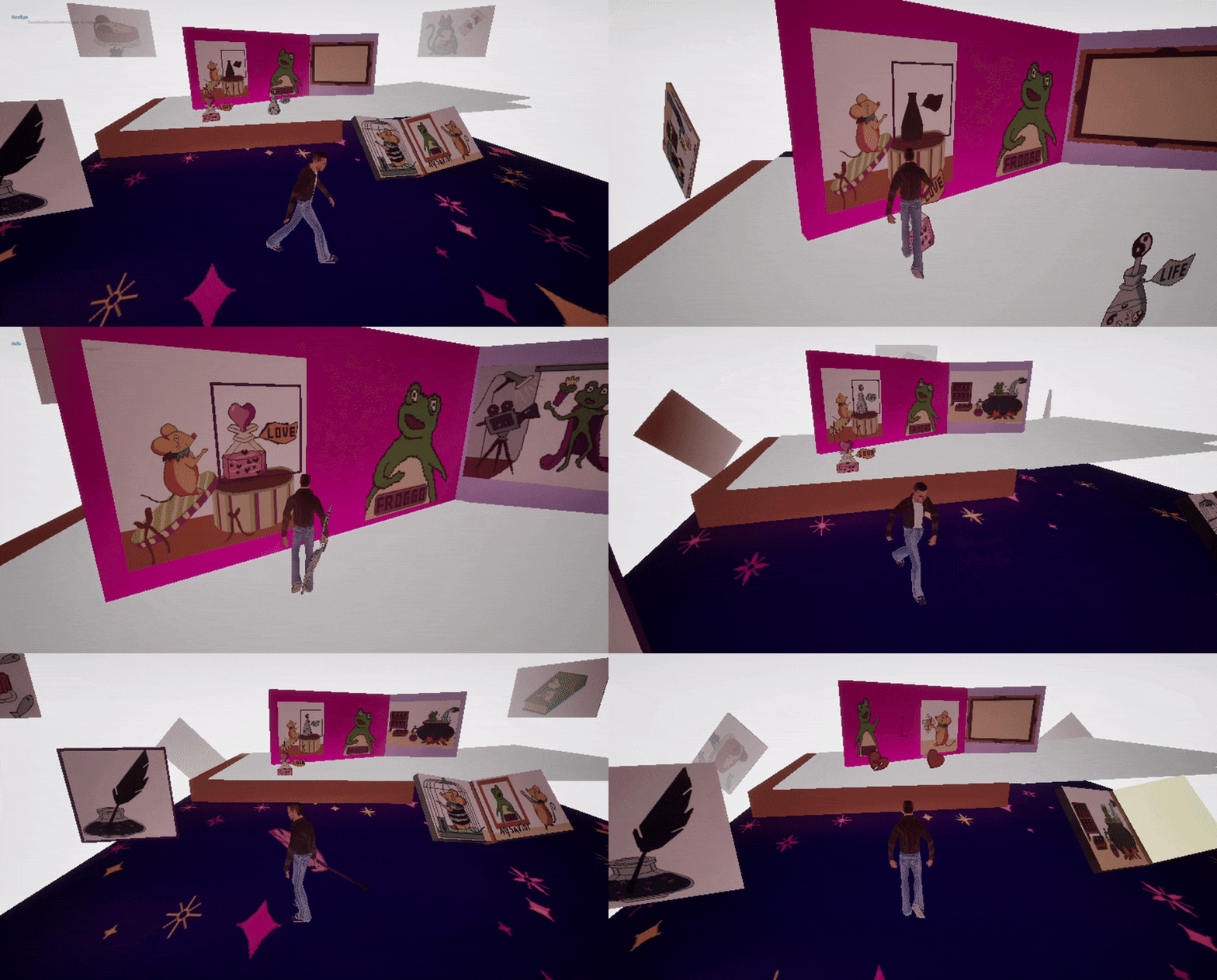
rotating endings that would fall down when player choices has made them unachievable.
Illustrations & Narrative
Changed Pitto Visuals to be different from Mushi.
what happens if pitto is in the cage? he was a hero. without him the war break outs.
Next Steps
-
Add light to the rotating Endings. so that when they fall there is a light change and attract attention.
Quest
Thanks for Reading